Farmers along the Kenyan coast work within an environment classified as Arid and Semi-Arid Lands (ASAL) where rainfall is uncertain and many households rely heavily on maize, cowpeas, sweet potato, and indigenous vegetables, yet a crop that fits this climate better has been proving its value in other regions of the country.
The SAWBO animation on Groundnuts: good agricultural practices for production (Swahili-Kenya) demonstrates, in simple visual steps, how this traditional crop can become a modern solution for food security, household nutrition, and new business opportunities.
Groundnuts: a resilient and affordable crop
To describe groundnuts as resilient means they can survive difficult conditions and still give a harvest. They tolerate dry spells better than most cereals and perform well in the sandy soils of Kwale, Kilifi, Tana River, and Lamu. Because the pods develop underground, moisture is conserved and the crop continues to mature even when maize struggles. This resilience offers ASAL farmers a dependable option in uncertain seasons.

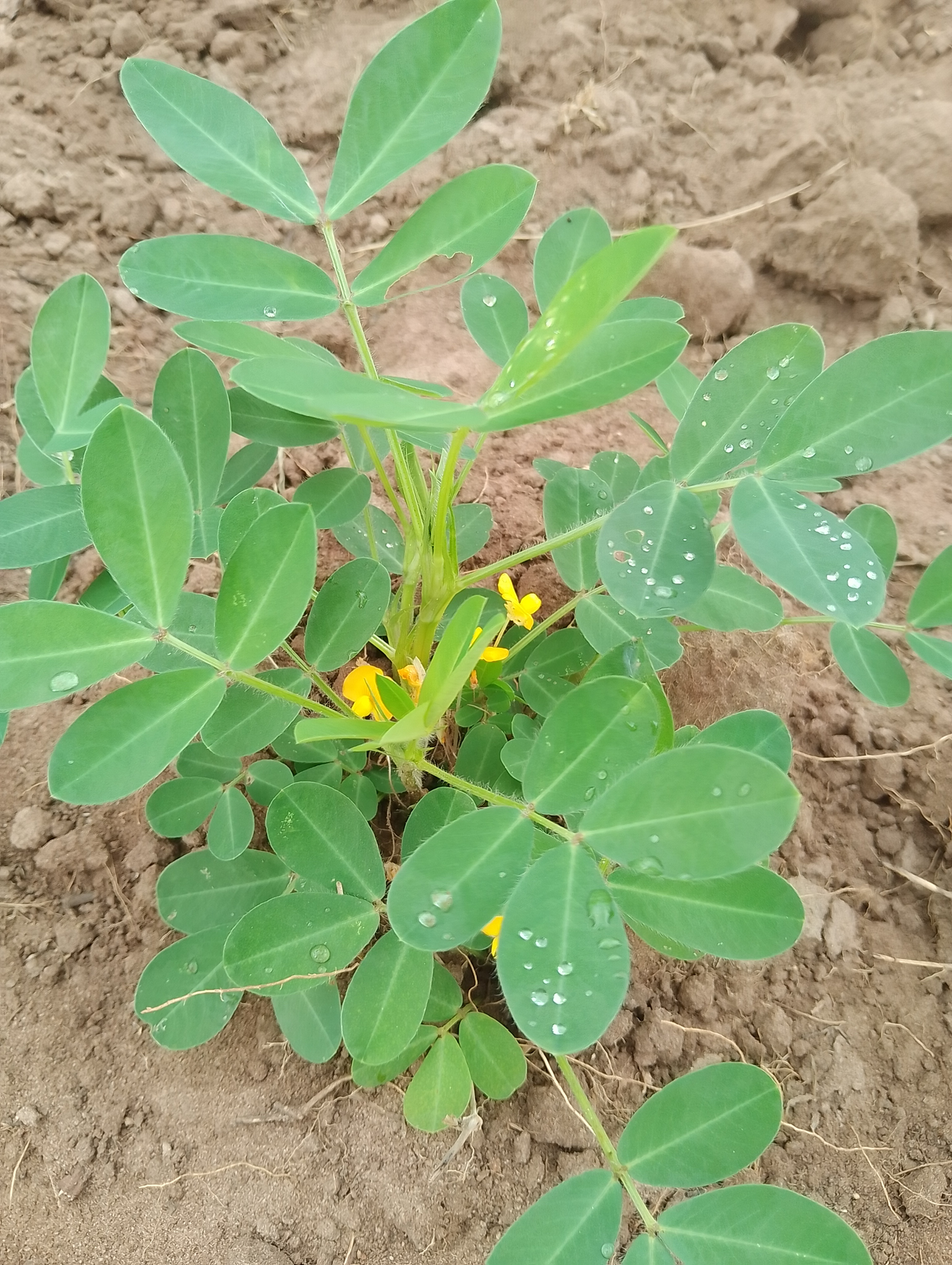
Healthy groundnut crop pictured at one of the farmers’ plots in the coastal ASAL region. The resilient plant provides nutritious food, reliable income, and renewed hope for smallholder families facing changing climate and dryland challenges. Photo credit: Kataru Concepts.
Groundnuts are also cheap to grow. They require little fertilizer and very few chemical compounds. As legumes, they naturally add nitrogen to the soil, hence improving fertility for the next crop. With good seed, timely weeding, and correct spacing, farmers can achieve good yields without heavy expenses which is an advantage when input prices are high.
What the SAWBO animation teaches
The SAWBO video guides farmers on proper planting, spacing, and seed depth so each plant accesses enough nutrients. It emphasises early weeding, pest scouting, and simple disease control methods. A second video explains also available in Swahili with a Kenyan accent eplains the process from harvesting, drying, and storage to prevent mould and aflatoxin contamination. These practical lessons turn knowledge into healthier food and better income for smallholder and cottage industry entrepreneurs.
Voices from the community
In December 2025 during a field extension visit, farmers trained by the Kataru Concepts team back in 2024 gave their encouraging feedback. The team had conducted farmer training sessions across Kwale County, where participants were introduced to SAWBO animation videos on groundnut production and post-harvest handling. After these sessions, many farmers tried the recommended practices and the results were encouraging.
One of the farmers from Shimba hills, Hamisi Mwinyi recalls that “During the training we watched the SAWBO animations and discussed how to space, weed, and dry groundnuts properly. I decided to follow those steps exactly. That season my harvest almost doubled, and the nuts were cleaner than before. I sold part of it and paid school fees for my daughter.”
From Kinango in Kwale County, Mwanamisi Lugogo shares her experience that “The training opened my eyes. I learned that groundnuts do not need expensive fertiliser. After watching the animation with the Kataru team, I planted in rows and stored the harvest on raised racks. Buyers offered a better price because the nuts were well dried. Now I want to add more acreage and start making peanut butter.”
These testimonies show how practical training combined with local-language animations can transform smallholder groups and households.
Nutrition and household well-being
Groundnuts are among the most versatile crops. They can be processed into cooking oil, providing a local alternative to expensive imported oils. The remaining cake becomes valuable animal feed for poultry, dairy cows, and goats. For home consumption, groundnuts offer roasted snacks, peanut butter, enriched porridge flour, and ingredients for many coastal dishes. Such products open doors for women and youth enterprises.
Increasing groundnut production will also reduce dependence on maize for edible oil manufacturing. With more local supply, processors can rely on groundnuts instead of maize, helping stabilise prices and strengthening food sovereignty along the coast.
Groundnuts contain protein, healthy fats, vitamins, and minerals essential for growth. In areas where meat or fish is scarce, they provide an affordable substitute. Families like that of Mwanamisi now enrich meals with groundnut paste, improving children’s diets even during dry months.
Groundnuts integrate easily with coastal mixed farming. They can be intercropped with cassava, pigeon peas, or maize, protecting soils and spreading risk. The crop matures within three to four months, matching short rainy seasons. Simple water-harvesting methods such as mulching and tied ridges further increase success.
Because the crop needs little fertiliser and few chemicals, production costs remain low while the environment is protected. The key is the knowledge shared through the SAWBO animations and trainings like those organised by Kataru Concepts.
The ASAL climate should guide us toward smart choices. Groundnuts offer resilience to drought, nutrition for families, raw material for cooking oil and animal feeds, and income for households. Growing them in larger quantities will cut reliance on maize-based oils and create strong local value chains.
Let farmers from Shimba Hills to Ganze, from Kinango to Lamu, allocate space for groundnuts this season. Our WhatsApp based networks shal continue sharering the SAWBO animations in Kiswahili, and work to translate them to Chidigo, Giriama, Duruma, and other languages so every village benefits. As Hamisi Mwinyi notes, “Groundnuts have given me a harvest I can trust.” Mwanamisi Lugogo echoes, “This crop does not ask for much, yet it gives so much.”
By embracing groundnuts supported by the 2024 Kataru Concepts trainings and SAWBO knowledge, the coastal region shall be planting more than a crop. It will be planting hope for healthier families, stronger soils, and a more prosperous ASAL economy.